


Wine
Slide Title
Scrivi qui la tua didascaliaButton
-
Visual Examination
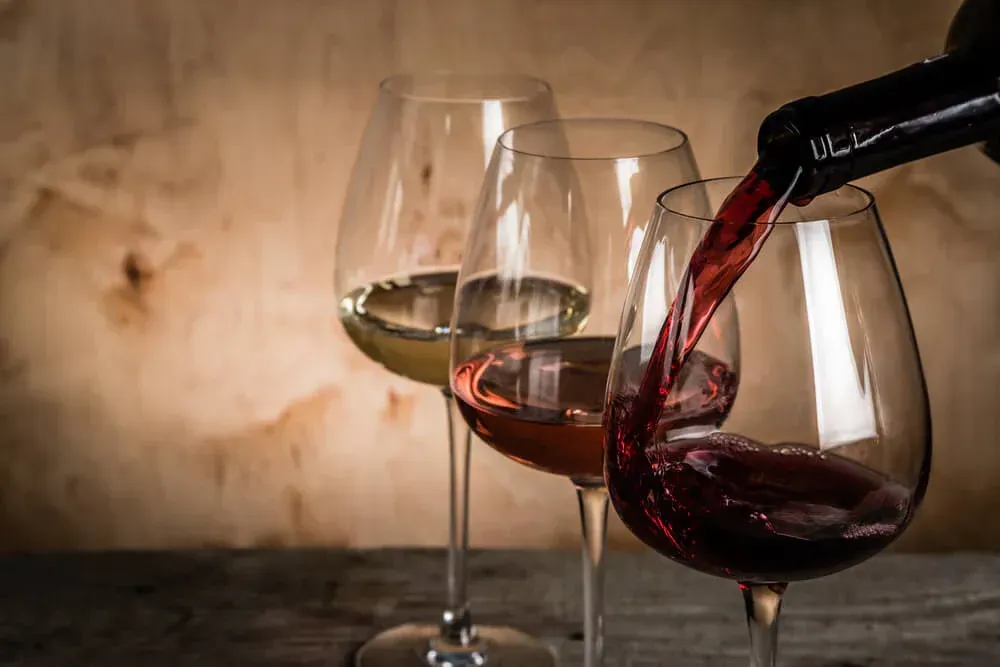
Visual examination is the first phase of organoleptic analysis and provides introductory information that will later be confirmed or not by the next stages: olfactory and gustatory. The human eye is the organ responsible for this function, and if visual examination reveals anomalies or alterations in the wine, the tasting should be stopped. The set of colors that make up the light spectrum forms white light. The color of the wine is therefore given by this liquid's ability to absorb or reflect the different wavelengths that compose white light.
We perceive white wine when, struck by white light, it reflects only the radiation corresponding to yellow tones and intensities. We perceive red wine when, struck by white light, it reflects only the radiation corresponding to red tones and intensities. The tool used to measure and quantify the level of absorption/reflection of white light is the spectrophotometer.
-
Olfactory Evaluation
To correctly perform the olfactory examination, the glass is held by the base or the stem, far from the mouth, to avoid any unwanted odors from the hand interfering with the wine’s aromas.
This step proceeds in three phases:
- bring the glass close to the nose and inhale deeply at regular intervals, with appropriate pauses to avoid olfactory fatigue;
- gently swirl the glass to create the "wine funnel", releasing aromatic substances and intensifying the smell; inhale deeply again. Then swirl more intensely and inhale several times at regular intervals;
- taste the wine by swallowing it and finally exhaling to create the "mouth aroma", bringing newly released aromas back to the olfactory mucosa due to body temperature (36–37°C). In professional tastings, the wine is not swallowed in order to avoid compromising the evaluation of the following samples.
-
Gustatory Examination
First, you must "prepare" the mouth by introducing a small amount of liquid to get the oral cavity ready; then proceed with tasting by introducing more wine; bring the wine to the front part of the mouth and inhale slightly to enhance the gustatory sensations; move the wine around with the tongue and exhale slowly. The wine will coat the entire oral cavity, allowing you to assess the balance of the different components (sugars, alcohols, acids, tannins); then swallow the wine and exhale while chewing with an empty mouth.
-
Taste sensations
The four fundamental tastes are:
- Sweetness/Softness (sugar/alcohol): a pleasant sensation determined by the presence of residual sugars. It is mainly perceived on the tip of the tongue.
- Acidity/Harshness: a less pleasant sensation caused by acids present in wine. It is perceived on the front sides of the tongue. These acids promote salivation.
- Saltiness: a very mild and pleasant sensation caused by mineral salts, perceived on the lateral and dorsal zones of the tongue.
- Bitterness: a sensation caused by polyphenols, especially tannins (quinones). If too pronounced, it can be unpleasant (a wine fault).
-
Tactile Sensations
- Thermal: this sensation relates to the temperature of the wine, which can affect the perception of the four basic tastes. Sweetness and softness are more perceptible at higher temperatures, while saltiness and bitterness are more perceptible at lower temperatures. Acidity is not directly influenced by temperature, but increasing the temperature may enhance the perception of sweetness and softness.
- Pseudo-thermal: not to be confused with the thermal sensation. It refers to the burning, dehydrating feeling due to the presence of alcohol (not related to alcohol content itself).
- Astringent: a dry and rough sensation caused by tannins, which react with mucin—a protein in saliva—reducing salivation and in some cases leading to dehydration. Tannins tend to decrease over time as the wine ages and they precipitate.
- Tingling: a sensation caused by the presence of CO₂, felt as a prickling. It is characteristic of sparkling and fizzy wines.
- Consistency: the perception of the type of substance (watery, fluid, viscous, etc.).
-
Retronasal Sensations
Mouth Aroma: through convection, when swallowing a quantity of liquid, warm air pushed from the pharynx meets cold air just inhaled; this gustatory-olfactory sensation is called “mouth aroma” or “Intense Aromatic Persistence” (I.A.P.).
Winetasting: small guide
1/12/2025